About three years ago, I blocked in disgust Wahid Azal’s main account on reddit after discovering what a totally despicable liar and traitor he was against r/exbahai.
And in a recent post, he doubles down on his bullshit, thus showing he has absolutely NO sense of ethics whatsoever. To put it bluntly, he is indeed EVIL. Recently, he blocked me in return, no doubt to stop me from seeing more of his lies, but I learned to get around that barrier to see what he’s been doing.
He said the following:
Like all other bahai lists online, exbahai is an echo chamber with an agenda tasked with gatekeeping and stymieing real opposition. There you have outright cyberbasijis rubbing shoulders with the BIA, like that recent arrival who was exposed here who is so transparent about what they are it doesn’t take a rocket scientist to figure it out. But whenever they and their transparently gratuitous talking points are pushed back against, this is what they always do: block. Yet note that over the past 4 years traffic to that subreddit has seriously come to a halt and it isn’t what it used to be. People are wisening up to the fact that not all is what it seems with exbahai. But when you appoint an imbecile, child groomer-pedo and head case like Gomer as a moderator, that is what you should expect. Also after u/investigator919 said what they said about the Woman, Life, Freedom Revolution in Iran, that list literally put a nail into its own coffin because there is no way they can talk that down or walk back an exbahai moderator’s outright parroting of IR government lines regarding what happened and is happening in Iran. This is why u/investigator919 was brought back as u/SuccessfulCorner2512 who is pretending now to be an exbahai hailing from an aristocratic Iranian bahai family when it is obvious who this person actually is.
_____________
wahidazal66
But that shouldn’t deter you. Just get another ID and go back over there and give em hell. I’m still there and whenever I don’t have anything better to do I have been commenting there for over 2 years now with an ID they won’t even expect. Been doing the same with r/bahai as well. In this age of hybrid warfare, there are no rules; and, morally speaking, no one is obliged to actually respect and abide by what the corporate American Tech Beast and its rules say. If you can find ways to f*ck with their heads and sh*t on them, by all means do so! This is a war after all. My rules are the Bayan and my own completion of it. Period, full-stop, and not American capitalism’s rules and the rules of its assorted minions who are the ultimate Enemy. No one ever won a war by abiding by their enemy’s rules which is also what Krishna tells Arjuna in the Baghavad-Gita during the battle scene. As I said to you privately, this is what the Qalandari Left-Hand Path is really all about: only abiding by the divine rules but never the rules of man! Again, note the story of Khidr and Moses in the Quran.
So let’s dissect these statements. shall we?
Like all other bahai lists online, exbahai is an echo chamber with an agenda tasked with gatekeeping and stymieing real opposition.
Azal claims the only real opposition to the Baha’i Faith is him. This is not possible at all because he is a Bayani and it was the Bab who started the disruptions in Persia (AKA Iran) that Baha’u’llah would decades later take advantage of to form his own Baha’i community out of the ashes of the failed Babi community. In order to really defeat the Baha’i Faith, you must discredit BOTH the Bab and Baha’u’llah! And that is something I can do…..because I am an ATHEIST!
There you have outright cyberbasijis rubbing shoulders with the BIA, like that recent arrival who was exposed here who is so transparent about what they are it doesn’t take a rocket scientist to figure it out.
I wonder who he was referring to. And what the hell is a “cyberbasiji”? His making up terms like that to insult people is just stupid.
But whenever they and their transparently gratuitous talking points are pushed back against, this is what they always do: block.
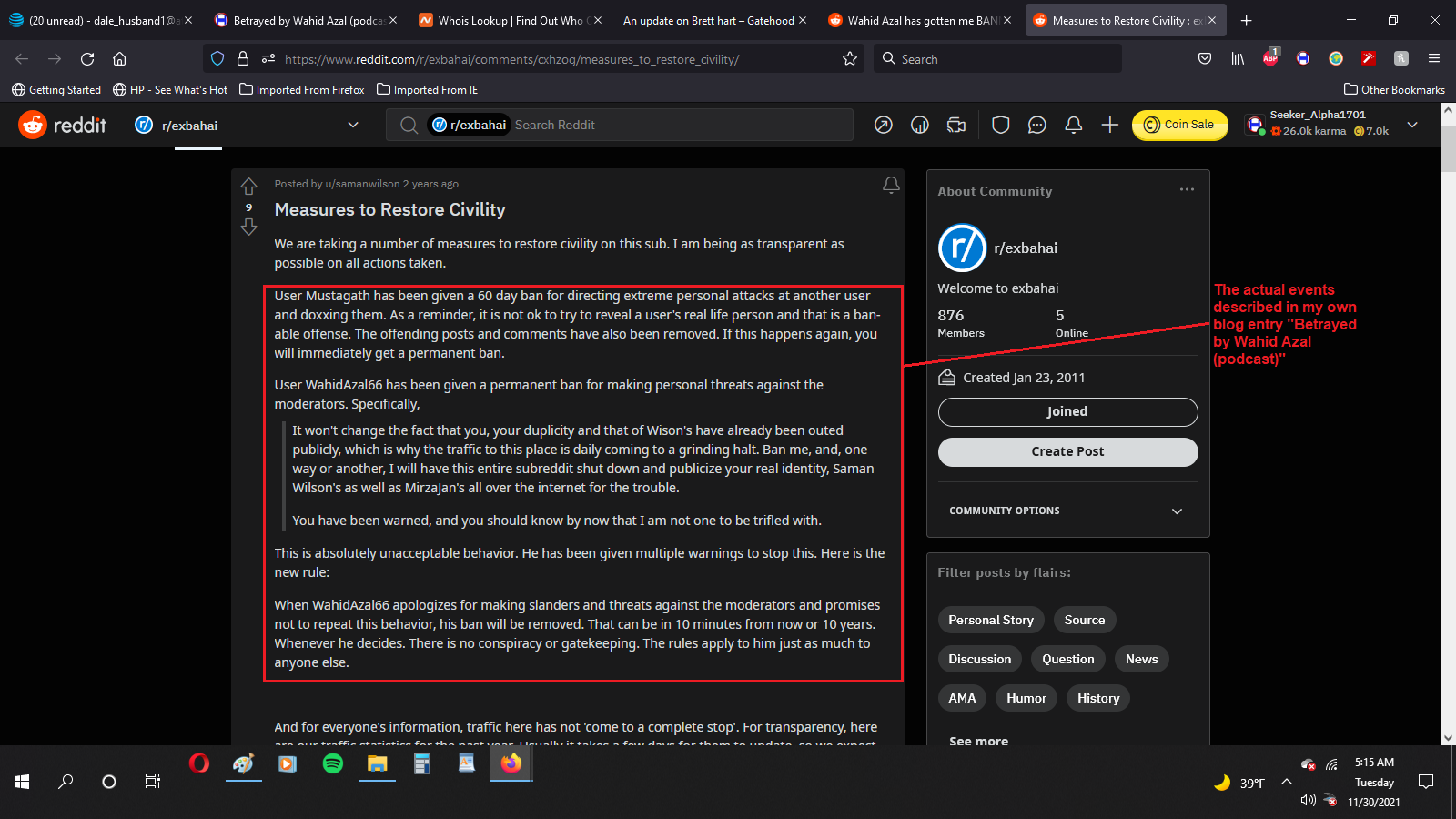
No, he gets banned from places like r/exbahai for being dishonest, disruptive and verbally abusive. Trolling, basically. That’s really all he does.
Yet note that over the past 4 years traffic to that subreddit has seriously come to a halt and it isn’t what it used to be. People are wisening up to the fact that not all is what it seems with exbahai.
He is just making that up. r/exbahai is doing quite well considering how few members it has. We do a lot of good there. I moderate that place, so I see what goes on there. Speaking of which:
But when you appoint an imbecile, child groomer-pedo and head case like Gomer as a moderator, that is what you should expect.
“Gomer” is the nickname he invented for me. And there is no proof whatsoever that I have ever molested or groomed a child. He says that about me because he knows I am better at discrediting the Baha’i Faith than he is, as noted before. I have written against pedophiles several times, as well as against teachers who sexually abuse their own students, like Mary Kay Latourneau, may she be damned!
Also after u/investigator919 said what they said about the Woman, Life, Freedom Revolution in Iran, that list literally put a nail into its own coffin because there is no way they can talk that down or walk back an exbahai moderator’s outright parroting of IR government lines regarding what happened and is happening in Iran.
He is referring to this:
Where investigator919 said this:
She wasn’t beaten to death. That was the lie that triggered the protests. The CT-Scans clearly show a prior brain surgery. However, since the average Joe can’t make a distinction between brain surgery and a blow to the head, everyone went with the narrative that she was killed because that’s what they wanted to believe. I had to fact-check the CT-Scan images myself through one of our relatives who is a doctor because I had no idea what the CT-Scan of her head was showing.
This is how the media fools you. And yes, the “so called” supreme leader (I don’t consider him my leader) wasn’t lying in this case and in similar protests. Every time there is any form of protest in Iran it is hijacked by ISRAEL / SAUDI / US / MEK media channels. I was surfing twitter for the past two weeks and there were so many lies being propagated by their media channels and being re-twitted and established as fact that it made me sick. Three examples:
-Tweet: <So and so district of Tehran has been overtaken by protesters.> Me: You idiots I live here there is no protest in this district and there never was.
-Tweet: <shows movie captioned: “innocent protester killed by police.”> Few hours later the complete movie is tweeted by another account that shows the so called dead protester getting up and walking away.
Tweet: <Iranian security forces open fire on peaceful people that had gathered to pray in the city of Zahedan killing twenty.> I immediately thought to myself this doesn’t make sense. Why would someone do this? Then even after a separatist group posted a video and claimed responsibility for inciting the violence, thousands of twitter accounts were still retweeting the initial fake narrative for days.
The whole goal is so called regime change. At the end of the day no one cares for Mahsa Amini or any other woman in Iran (if they did we wouldn’t have been sanctioned by western governments to the dark-ages). Just a few days ago nearly 30 Shia women were killed by suicide bomber in Afghanistan. No one batted an eye. In fact those bombings and killings of innocent women happen on a daily basis in Afghanistan, Yemen, and also Palestine. But no one cares. No one gives a shit. What made Mahsa Amini different? What makes Iran so special? Regime change in Iran. Toppling a government that opposes the west and refuses to bow to it.
The Iranian government is neither the angel that it portrays itself and neither the devil that is portrayed by the west. It’s like every other government with its shortcomings and also good points. But if you want to measure the level of savageness of a government by counting the number of people it has killed, then I’m sure it’s no where near the top of the list where the US / Israel / Saudi and a bunch of other western countries stand.
What’s ironic about Wahid’s demonization of investigator919 is that Baha’is in reddit do the same thing to him and for the same reason: he is a Shia Muslim who lives in Iran. But if you look carefully, he is NOT merely parroting the claims of the Iranian government.
And yes, the “so called” supreme leader (I don’t consider him my leader) wasn’t lying in this case and in similar protests.
The Iranian government is neither the angel that it portrays itself and neither the devil that is portrayed by the west. It’s like every other government with its shortcomings and also good points.
He may have blind spots with regards to Shia teachings, but he does show critical thinking in this case.
There was an exchange of messages between him and me that read as follows.
I’ve been so ANGRY about Iran and about Islam these past couple of weeks that I wasn’t sure I could even discuss the matter with you without coming across as rude and even a bit bigoted. Thanks for not humiliating me in public.
_______________
No need to apologize. I don’t blame you for being angry. The media and cyberspace these days is filled with truths, half-truths, and outright lies. No one knows what to believe anymore.
Moving on……
This is why u/investigator919 was brought back as u/SuccessfulCorner2512 who is pretending now to be an exbahai hailing from an aristocratic Iranian bahai family when it is obvious who this person actually is.
Another completely made up claim. I can usually tell when someone like Wahid Azal or DavidBinOwen is using sockpuppets to infiltrate subreddits they have been banned from (which is a clear violation of reddit rules). They have a distinctive writing style and means of expression that they cannot change, which proves they are incompetent. So is Wahid saying that investigator919 is better at faking a personality than he is? LOL!
See what happened between those two here:
Wahid Azal Disgraces Himself Again.
The difference in expressions between investigator919 and SuccessfulCorner2512 is light years apart. So why did Azal claim they are the same person? Because that is what pathological liars do, even if it makes them look STUPID!
But that shouldn’t deter you. Just get another ID and go back over there and give em hell. I’m still there and whenever I don’t have anything better to do I have been commenting there for over 2 years now with an ID they won’t even expect. Been doing the same with r/bahai as well.
So here we see Azal clearly admitting to violating reddit rules and encouraging such violations from others! That should get him banned permanently from reddit, and I mean ALL his accounts, FOREVER!
In this age of hybrid warfare, there are no rules; and, morally speaking, no one is obliged to actually respect and abide by what the corporate American Tech Beast and its rules say. If you can find ways to f*ck with their heads and sh*t on them, by all means do so! This is a war after all. My rules are the Bayan and my own completion of it. Period, full-stop, and not American capitalism’s rules and the rules of its assorted minions who are the ultimate Enemy. No one ever won a war by abiding by their enemy’s rules which is also what Krishna tells Arjuna in the Baghavad-Gita during the battle scene. As I said to you privately, this is what the Qalandari Left-Hand Path is really all about: only abiding by the divine rules but never the rules of man! Again, note the story of Khidr and Moses in the Quran.
This is the “ends justify the means” fallacy. Joseph Stalin made himself the supreme lawmaker in the Soviet Union for decades and killed MILLIONS of his own people simply to enforce his will on them. Mao Zedong killed millions of his own Chinese people. Pol Pot is said to have killed ONE-THIRD of the Cambodian people in the same way! And I have no doubt if Wahid Azal ever gains political power anywhere, he will also exterminate people. After all, in war you kill people en masse on a regular basis … and didn’t he call what he does a war? Why protest against the tyranny of the Islamic Republic of Iran and the hypocrisy of the Haifan Baha’i leadership when he is indeed no better than them?
And Wahid Azal’s own insanity make me think the Bab was just as crazy and dangerous. No wonder he was killed in 1850!
And for the record, my rejection of the Baha’i Faith in 2004-2005 had nothing to do with the Bab. But I hate the Bab’s legacy NOW……because of WAHID AZAL! May he be DAMNED forever!






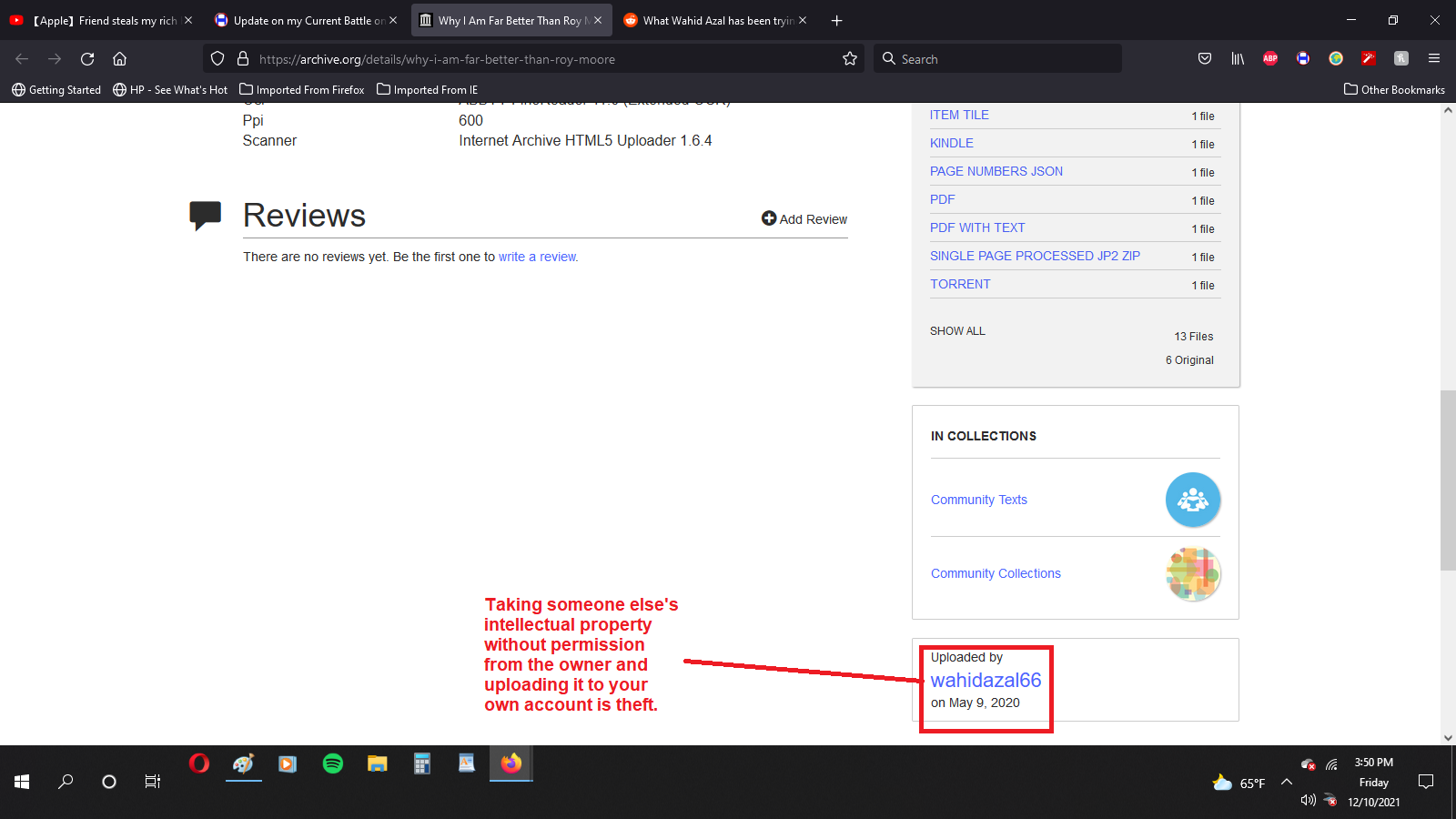


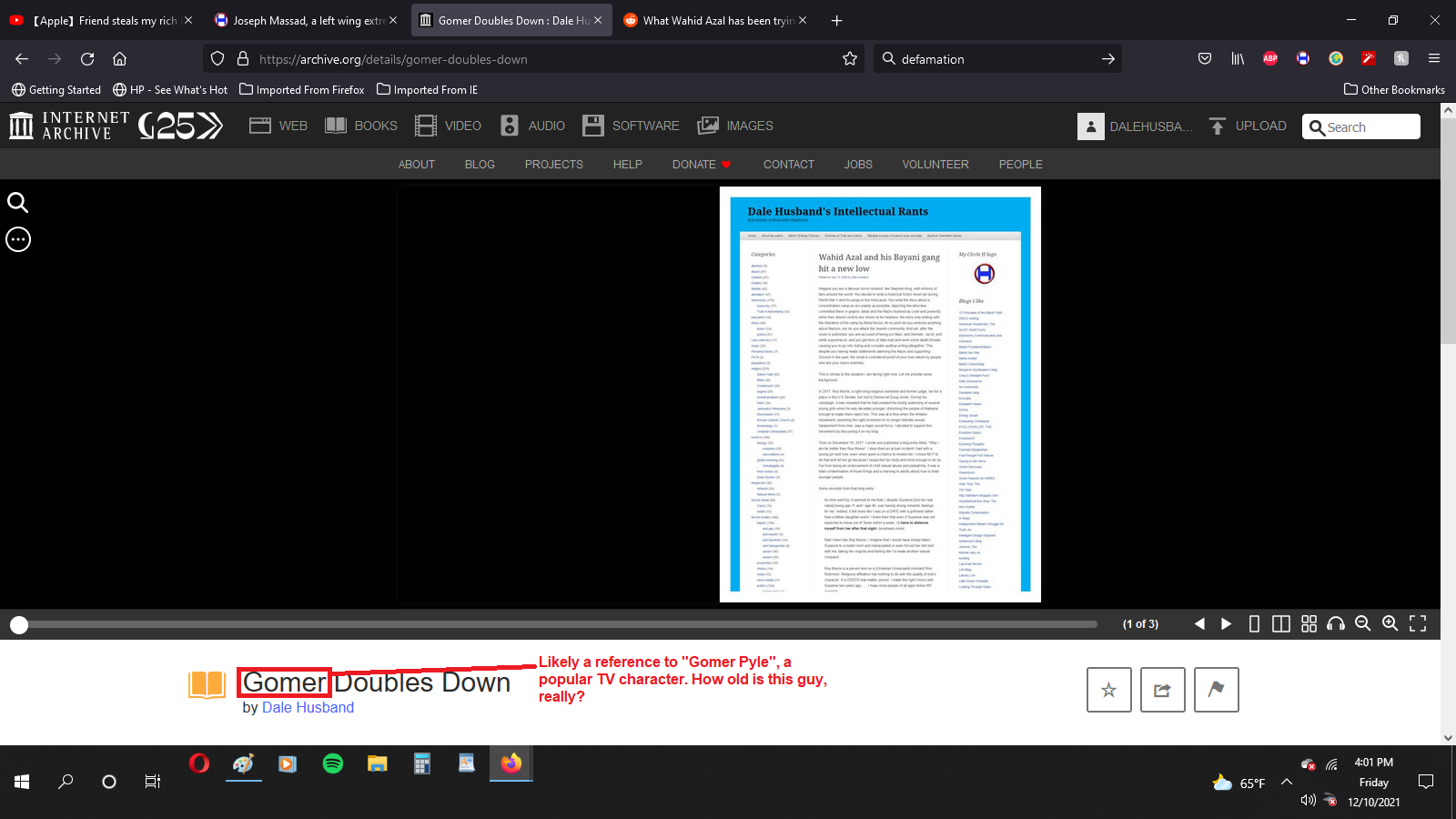





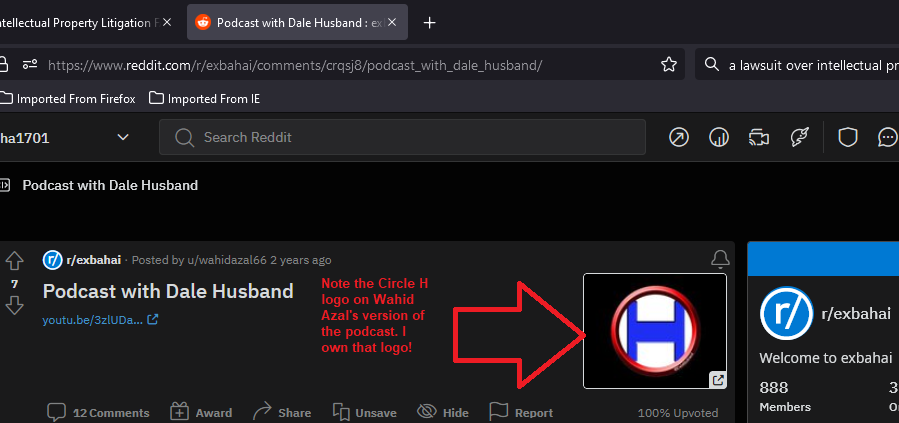





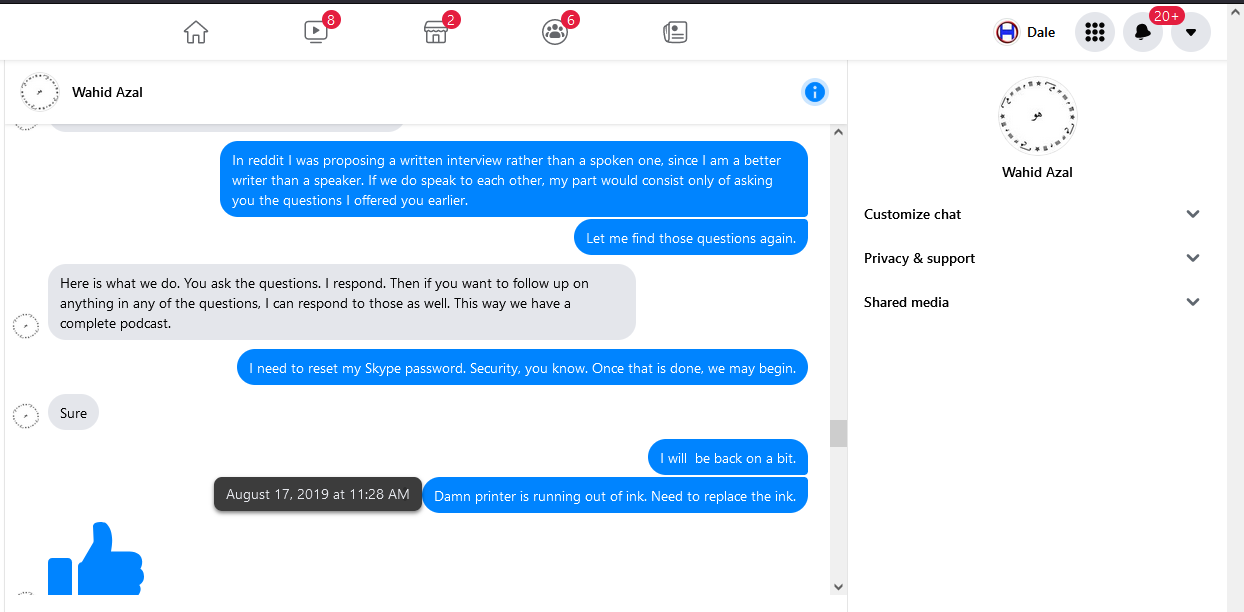

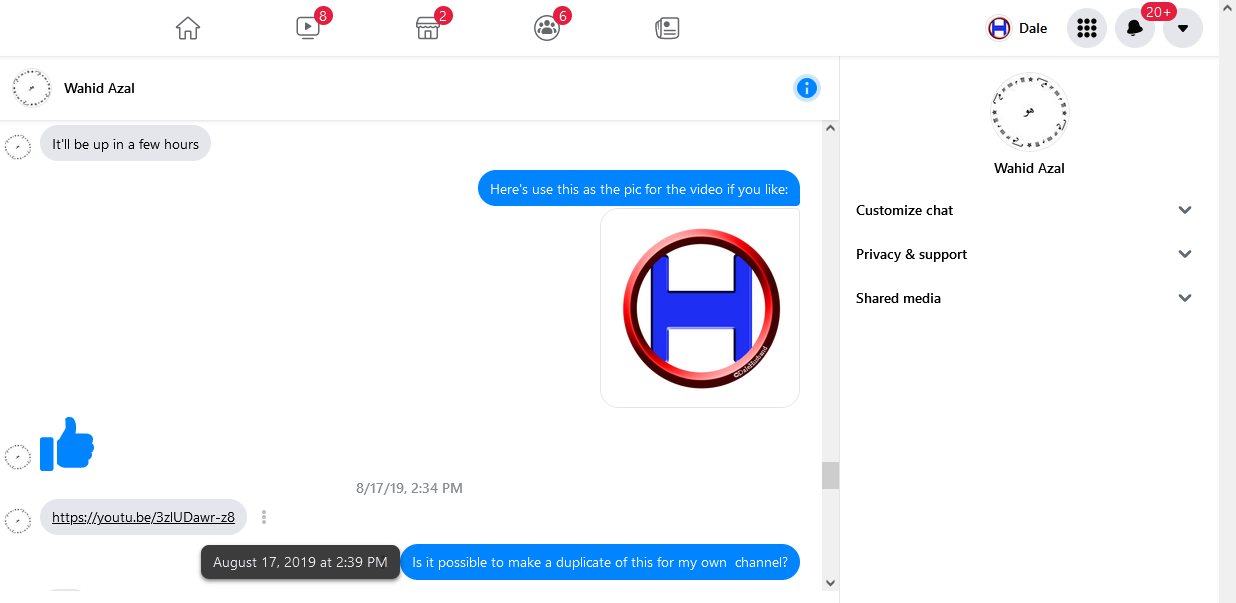





 Dale Husband's Intellectual Rants
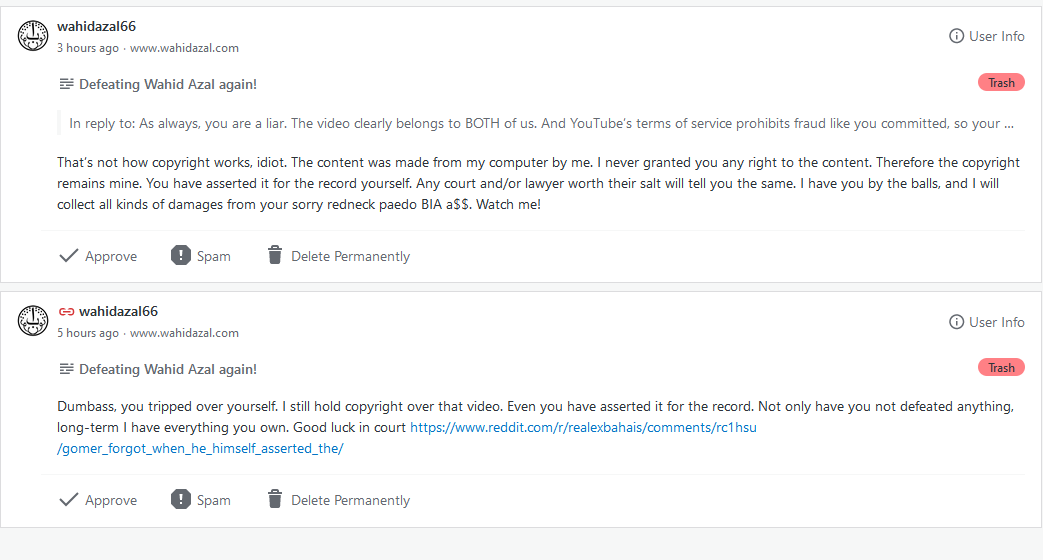
It looks like your video was removed because Vimeo received an official notice of copyright infringement for it. We are required by the Digital Millennium Copyright Act (“DMCA”) to remove videos when we receive takedown notices from the copyright owner or their agent.
This takedown notice was made regarding:
“Podcast with Wahid Azal” (https://vimeo.com/654107711) was removed on Dec 8, 2021 due to a claim by N. Wahid Azal based on “FSO content”
DMCA Claimant(s)
N. Wahid Azal
If you believe that your material has been removed by mistake or misidentification, you might be able to talk to the copyright owner who made the complaint and convince them to retract their notice.
Alternately, you may be able to provide VIMEO with a counter-notification through our online tool: https://vimeo.com/dmca/counter
If you have any doubts or questions about the counter-notification process, we recommend that you consult your legal counsel. THERE MAY BE SERIOUS LEGAL CONSEQUENCES IF THIS FORM IS MISUSED.
You should not re-upload the material, as further complaints against you could result in removal of your account.
You can find more information about your copyright strikes and past DMCA notices here: https://vimeo.com/settings/videos/dmca
You can learn more about the DMCA process on Vimeo here: https://help.vimeo.com/hc/en-us/sections/203914978-DMCA
Sincerely,
Aaron
Trust & Safety